If an easy Denver or Boulder commute is at the top of your wish list, you are not alone. Many buyers zero in on Westminster because it offers multiple ways to get downtown or to Boulder without sitting in highway traffic every day. In this guide, you will learn how the B Line commuter rail and the US‑36 Flatiron Flyer BRT shape buyer demand, rentability, and long-term resale potential along the corridor. Let’s dive in.
Why transit access matters
Reliable transit can cut your door-to-door commute and make arrival times more predictable. If you can walk to a station, you often gain back time you would spend in traffic or searching for parking. Over time, convenience and predictability tend to support both pricing and rentability for homes close to high-quality transit.
Westminster sits between Denver and Boulder with a diverse housing mix and a population in the mid-five figures, roughly 115k to 120k. Two commuter streams drive demand here. Denver-bound commuters often prioritize the B Line into Union Station or Flatiron Flyer express trips. Boulder-bound commuters favor the Flatiron Flyer. The strongest transit influence concentrates around Westminster Station on the B Line and the US‑36 corridor’s stops and park‑and‑rides.
B Line vs Flatiron Flyer
The B Line at a glance
The B Line is commuter rail serving Westminster Station with a direct connection to Denver Union Station. You get the comfort of rail travel plus seamless transfers to the region’s broader transit network. Buyers who value rail’s fixed-guideway and a stable schedule often prioritize this option.
The Flatiron Flyer BRT
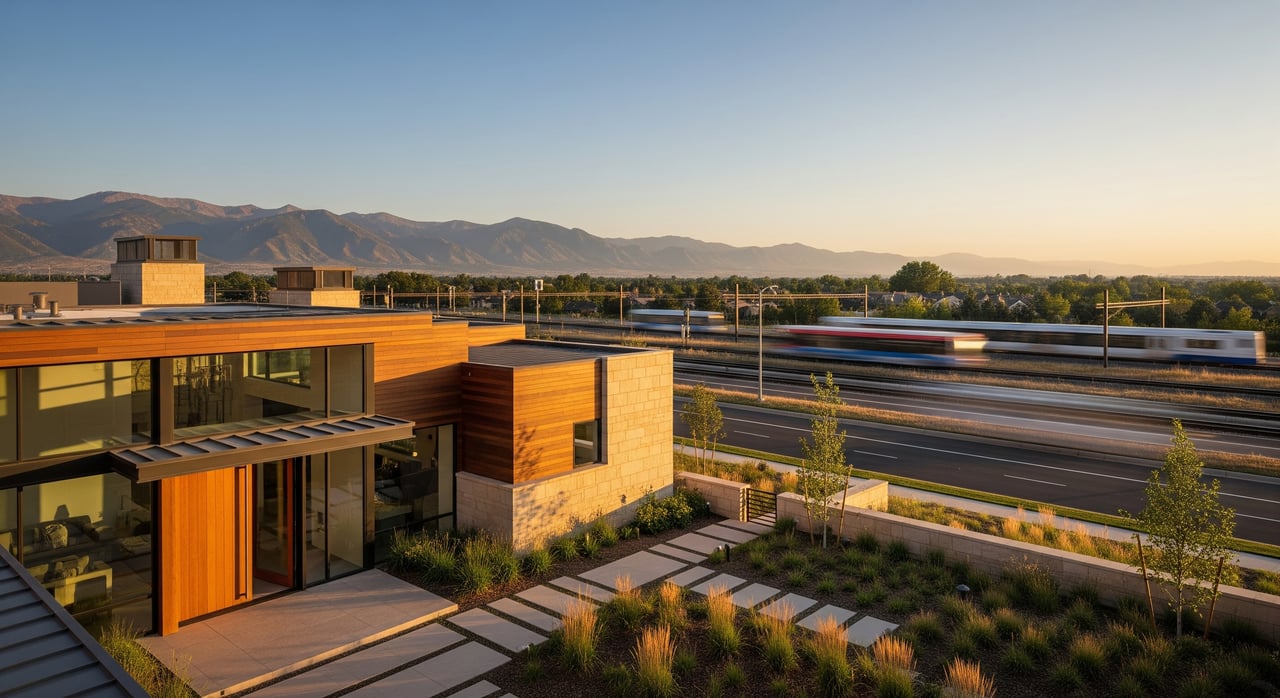
The Flatiron Flyer runs in managed lanes on US‑36 between Denver and Boulder with limited stops and higher speeds than typical buses. Its reliability and frequency help it compete with rail for time-sensitive commuters. If you work in Boulder or along US‑36, this is often the most direct option.
What this means for value
Both modes can support buyer demand, but the effect varies by micro-location. Rail often carries a perception of permanence that can translate into stronger premiums near stations. High-quality BRT with dedicated lanes can capture many of the same benefits, especially when service is frequent and walk access is safe and simple.
Where proximity boosts value
Homes within a comfortable walk of Westminster Station or a major US‑36 Flatiron Flyer stop often see the strongest demand. Walkable access is usually within 0.25 to 0.5 mile, about a 5 to 15 minute walk. Properties near active station-area redevelopment or mixed-use amenities can improve rentability and resale, especially over a 5 to 10 year horizon.
That said, micro-location matters. Being very close to a large parking lot, bus staging area, or congested arterial can offset benefits with noise or traffic. Parcels that are technically close but cut off by highways or unsafe crossings rarely capture the full walkability premium.
What to evaluate at each property
Use this checklist to judge whether transit proximity will meaningfully support pricing and future resale.
- Distance and walking time: Are you within 0.25 to 0.5 mile of a station or stop on safe sidewalks and crossings?
- Service frequency and reliability: Do B Line or Flatiron Flyer schedules match your peak needs, including off-peak flexibility?
- Door-to-door travel time: Compare peak-hour transit time, including the first and last mile, to your current drive.
- First/last-mile options: Look for sidewalks, bike lanes, local shuttles, or feeder routes that smooth the trip.
- Park‑and‑ride dynamics: If you must drive to a lot, you may gain convenience but lose the walkable premium.
- Local amenities and TOD: Mixed-use zoning, retail, and planned projects near stations tend to lift rentability.
- Planned investments: Station-area plans and frequency improvements can shift demand over the medium term.
- Local comparables: Review sales and RENT comps within 0 to 0.25 mile, 0.25 to 0.5 mile, and 0.5 to 1.0 mile.
How demand shows up in Westminster
You will notice two buyer profiles cluster around transit. First, Denver-bound buyers who want an easy jump to Union Station often prioritize Westminster Station and nearby walkable blocks. Second, US‑36 commuters to Boulder focus on Flatiron Flyer access and quick transfers at corridor stops.
As service quality and walk access improve, investor interest tends to follow. Smaller homes, condos, townhomes, and well-located single-family properties often rent faster near reliable transit. Lower transportation costs can widen the renter pool, reducing vacancy risk.
The pricing question
Studies across the country show a positive price effect near high-quality transit, with results varying by mode, frequency, and walkability. Rail and fixed-guideway systems often post stronger premiums than standard bus service. High-quality BRT like the Flatiron Flyer tends to outperform conventional bus routes, though it may still trail commuter rail in typical premium size. The exact Westminster effect should come from current local comps, parsed by distance bands from the relevant station or stop.
A practical approach is to analyze recent sales within 0 to 0.25 mile, 0.25 to 0.5 mile, and 0.5 to 1.0 mile of Westminster Station or a Flatiron Flyer stop. Pair that with an honest look at micro-location strengths and drawbacks. This gives you a grounded sense of what the market is already pricing in.
Commute and rentability tips
- Test real commutes: Plan a peak-hour trip by rail or BRT from the property and compare the timing to a live driving estimate.
- Walk the route: Confirm sidewalk continuity, crossings, lighting, and bike options. A short, safe walk is often worth more than a theoretical distance.
- Check frequency: Make sure peak and off-peak headways align with your schedule. Predictability matters as much as speed.
- Look ahead: Note station-area plans or mixed-use proposals. Longer-term improvements can support appreciation.
- Balance tradeoffs: If you value bigger lots or quieter streets, you might prefer a spot just beyond the busiest blocks while staying within a bike-friendly radius.
Using this in your search
Start by mapping your typical destination. If you commute to downtown Denver, target walkable blocks around Westminster Station or easy feeder routes. If your job is in Boulder, focus on neighborhoods with comfortable access to Flatiron Flyer stops or park‑and‑rides that avoid congested arterials.
Next, stack-rank properties by walkability first, then by service frequency and door-to-door time. Finally, compare recent comps at different distance bands to see how buyers have valued similar access. This will help you bid confidently or price your listing to capture transit-driven demand.
If you want a data-backed plan, we can help you assemble commute comparisons, verify current schedules, and pull the right comps by distance band. You will make decisions with fewer surprises and clearer resale logic.
Ready to find the right Westminster home near the B Line or US‑36 Flatiron Flyer? Reach out to Lydia’s Home Team for a custom commute and comps review, plus a pricing strategy that fits your timeline and goals.
FAQs
Will transit near Westminster cut my commute time?
- Often yes, especially if you can walk or bike to a station or stop and avoid peak traffic. Exact savings depend on first and last mile details and schedule frequency.
Do homes near the B Line or Flatiron Flyer sell for more?
- Many markets show a positive premium near high-quality transit. In Westminster, the strongest effects tend to occur within a short, safe walk to frequent service and nearby amenities.
Is high-quality BRT as good as rail for value?
- High-quality BRT with dedicated lanes can approach rail benefits, but rail’s perceived permanence can support stronger or more durable premiums in some areas.
What are the downsides of being very close to a station?
- Possible issues include noise, parking spillover, and bus or auto traffic. The exact impact depends on buffers, street layout, and how pedestrians and vehicles are managed.
How do I verify the premium for a specific property?
- Review recent sales and rent comps in 0 to 0.25 mile, 0.25 to 0.5 mile, and 0.5 to 1.0 mile bands, then layer in walkability and service frequency to match your commute.